PARSEC > MEMBERS > E-POSTERS > 2025
2025 E-Posters
The 2025 CAPA Annual Conference showcased digital research posters from PAs and PA students across Canada, highlighting the profession's growing contributions to evidence-based medicine, clinical education, and research.
E-Posters were accepted across three categories: 1) Clinical research, 2) Case Reports, and 3) Educational Projects. E-Posters were displayed both in-person and virtually at the conference, providing broad access to PA scholarship. Presenters earned CPD credit.
2025 EPoster Winners
-
1st Place
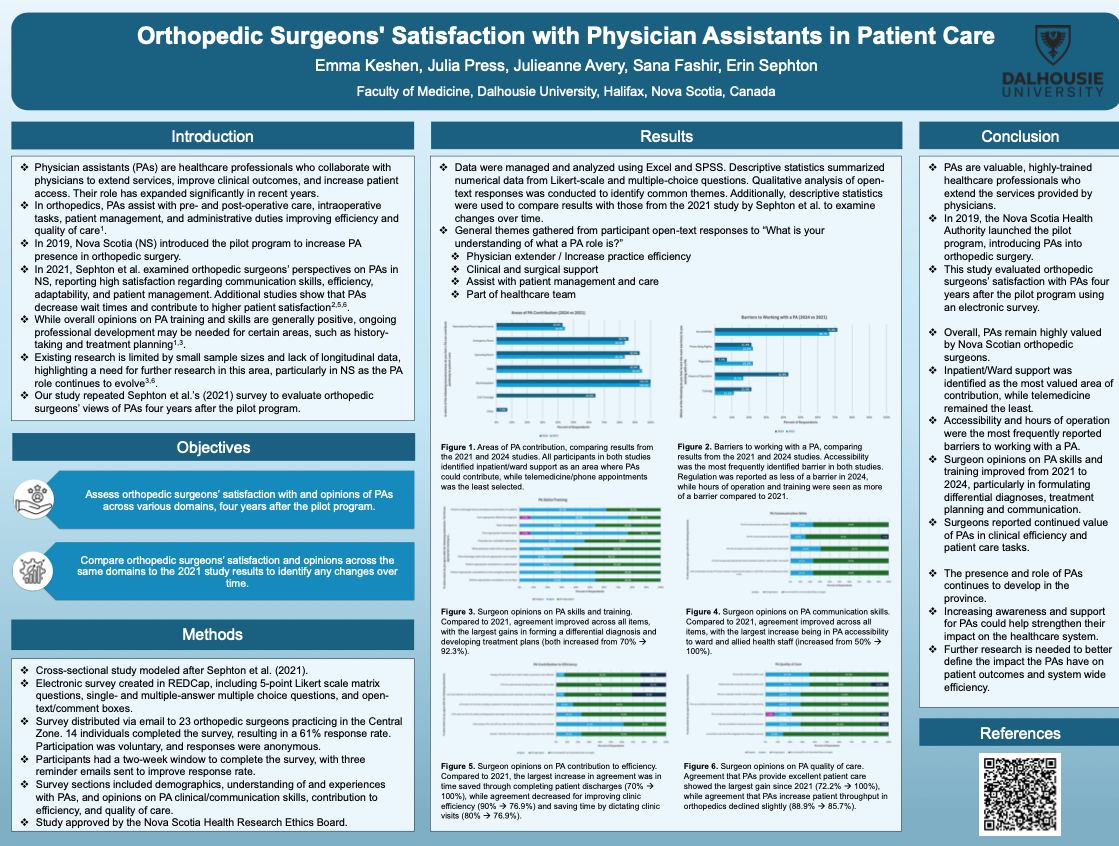
“Orthopedic Surgeons' Satisfaction with Physician Assistants in Patient Care”
by Emma Keshen, Julia Press, Julieanne Avery, Sana Fashir, Erin Sephton
-
2nd Place
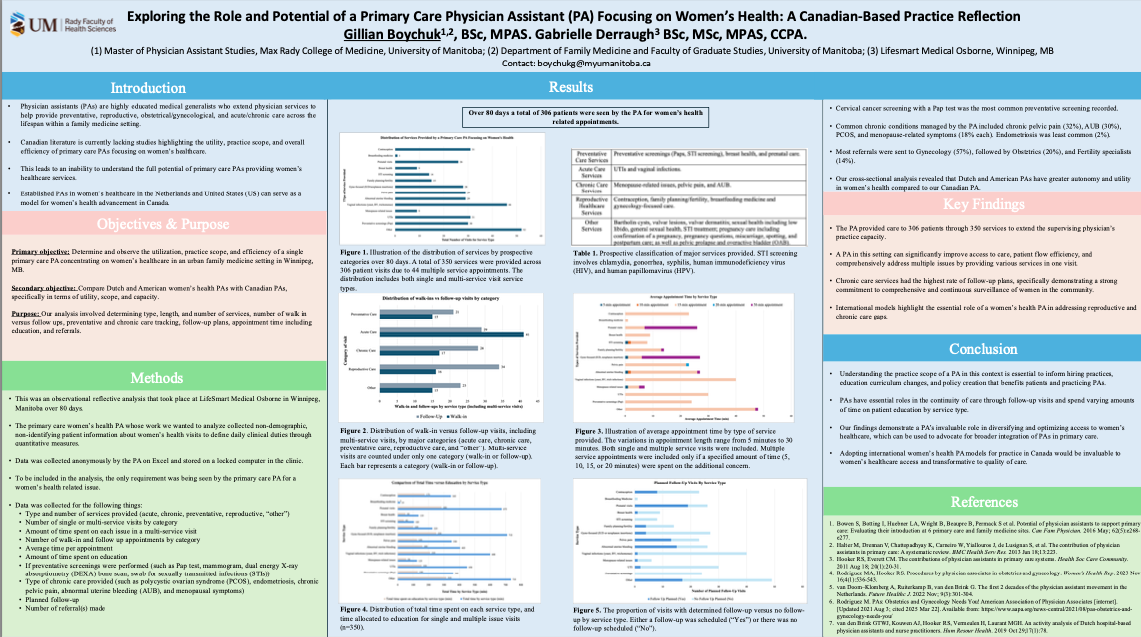
“Exploring the Role and Potential of a Primary Care Physician Assistant (PA) Focusing on Women’s Health: A Canadian-Based Practice Reflection”
by Gillian Boychuk, BSc, MPAS. Gabrielle Derraugh BSc, MSc, MPAS, CCPA.
-
3rd Place
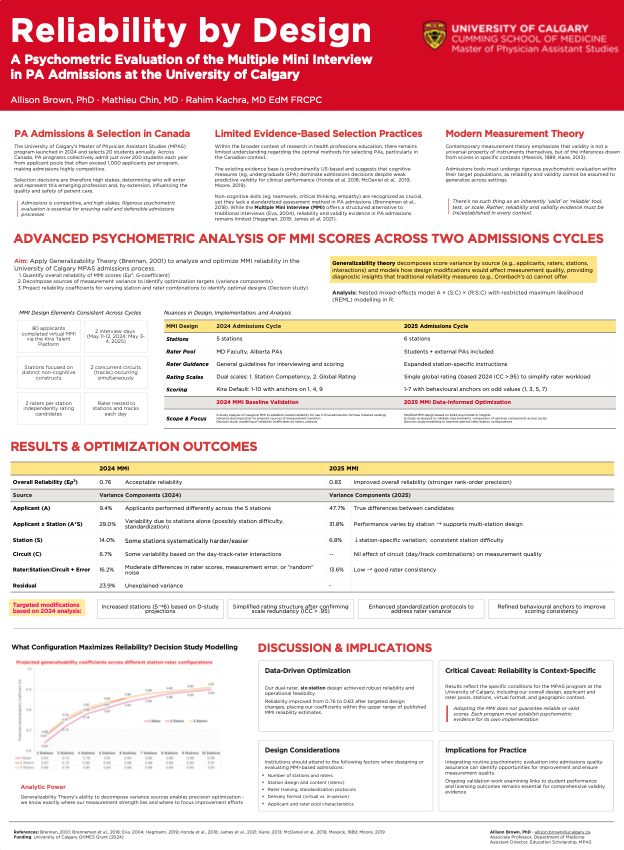
“Reliability by Design: A Psychometric Evaluation of the Multiple Mini Interview in PA Admissions at the University of Calgary”
by Allison Brown, PhD · Mathieu Chin, MD · Rahim Kachra, MD EdM FRCPC
-
Reader's Choice Award
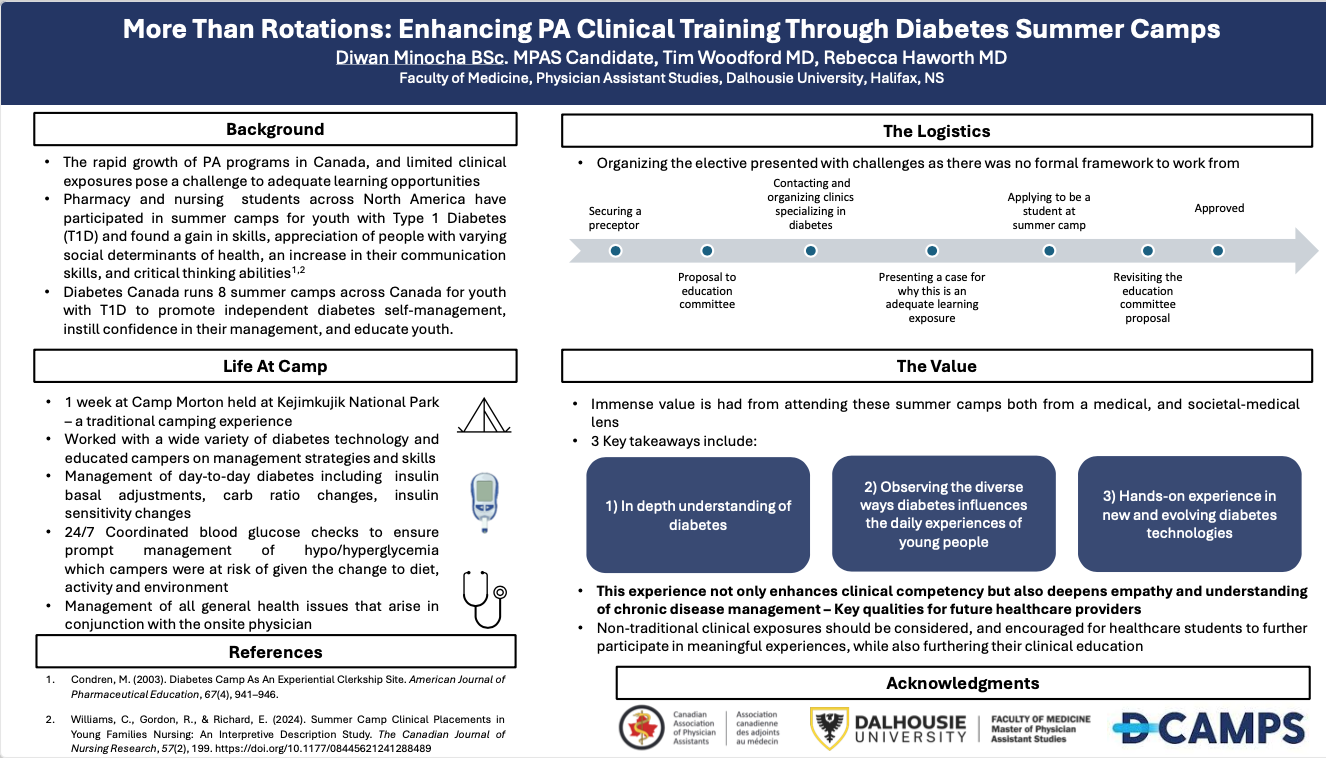
“More Than Rotations: Enhancing PA Clinical Training Through Diabetes Summer Camps “
by Diwan Minocha BSc. MPAS Candidate, Tim Woodford MD, Rebecca Haworth MD
Click on each poster to view the full PDF.

Morvan Syndrome with CASPR2-Associated Autoimmune Encephalitis: Highlighting the Physician Assistant’s Role in a Rare Neurological Emergency // Yashfeen, M. (2025). Department of Neurology, Government Stanley Medical College, Tamil Nadu, India. // A rare case of CASPR2-associated Morvan syndrome demonstrating the critical role of Physician Assistants in coordinating multidisciplinary care, facilitating early diagnosis, and improving outcomes in complex neurological presentations.

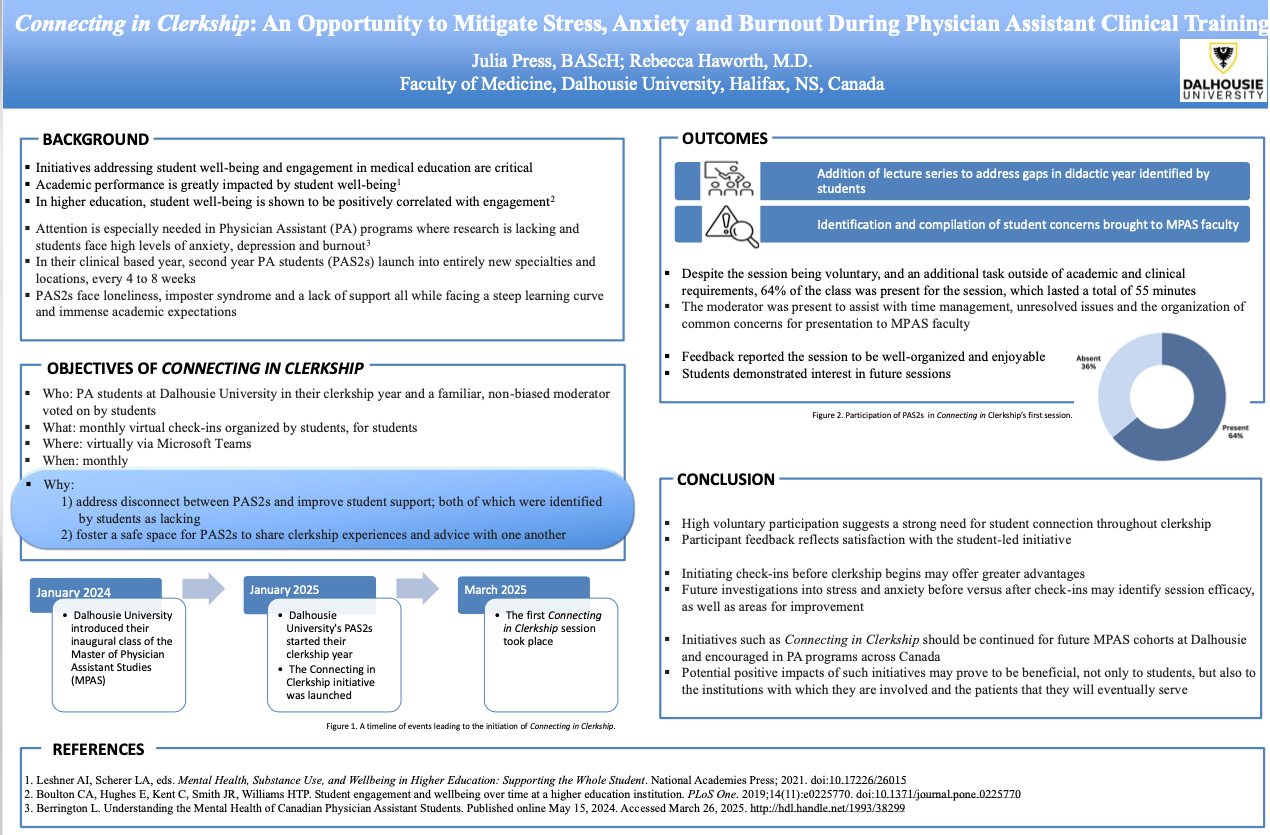
Connecting in Clerkship: An Opportunity to Mitigate Stress, Anxiety, and Burnout During Physician Assistant Clinical Training // Press, J., & Haworth, R. (2025). Dalhousie University, Faculty of Medicine. // A student-led initiative introducing monthly peer check-ins among PA students to promote well-being, connection, and engagement throughout clerkship, with high participation and positive feedback supporting its continuation

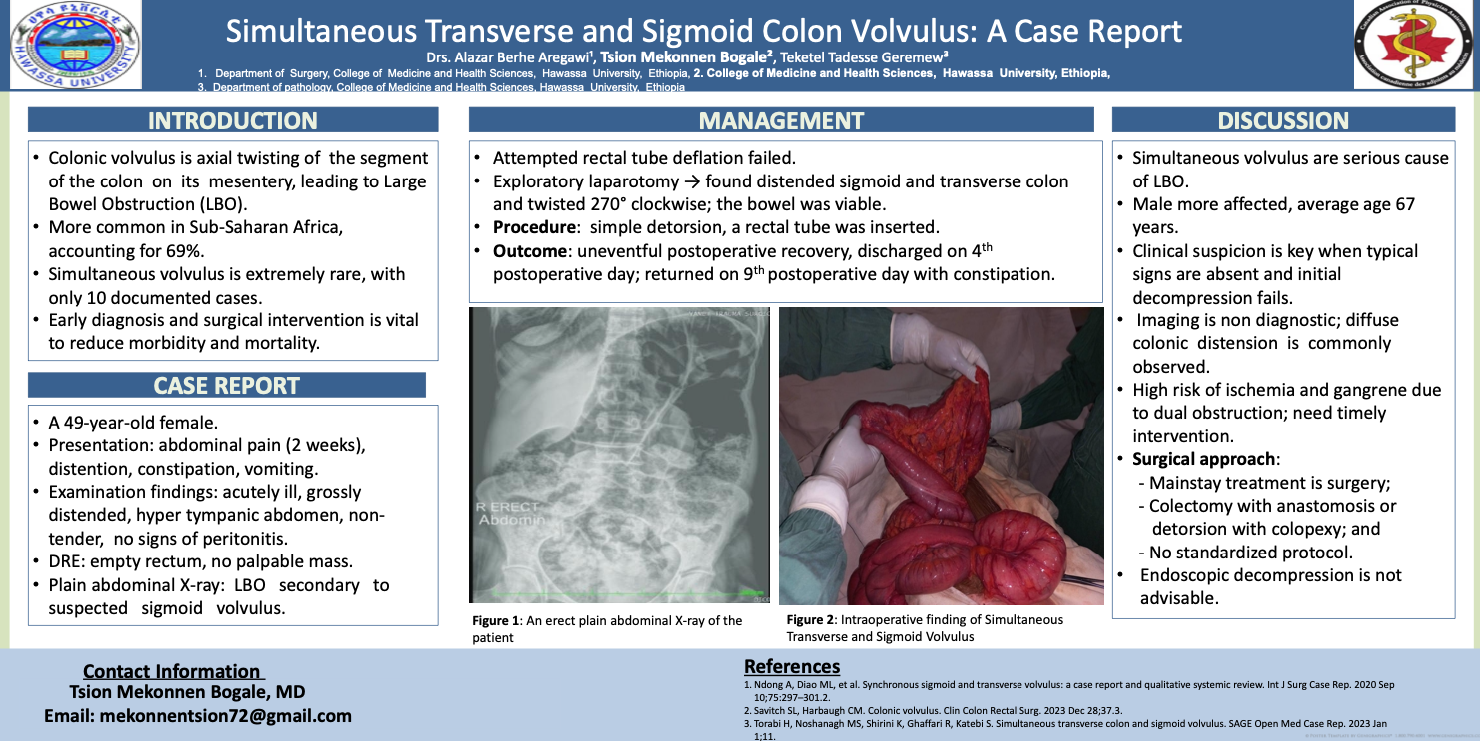
Simultaneous Transverse and Sigmoid Colon Volvulus: A Case Report // Aregawi, A. B., Bogale, T. M., & Geremew, T. T. (2025). Hawassa University, Ethiopia. // A rare case report describing the concurrent presentation and successful surgical management of sigmoid and transverse colon volvulus.

Reliability by Design: A Psychometric Evaluation of the Multiple Mini Interview in Physician Assistant Admissions // Brown, A., Chin, M., & Kachra, R. (2025). University of Calgary, Cumming School of Medicine. // This study applied Generalizability Theory to improve reliability and fairness in PA admissions, setting a benchmark for evidence-informed interview design.

Exploring Interprofessional Education for Collaborative Practice (IPECP) in Physician Assistant Education: A Scoping Review Protocol // Van Dam, L., et al. (2025). Dalhousie University & Arcadia University Collaboration. // A scoping review protocol mapping evidence on interprofessional learning in PA education to identify strategies that strengthen teamwork and professional identity.

Title: More Than Rotations: Enhancing PA Clinical Training Through Diabetes Summer Camps // Minocha, D., Woodford, T., & Haworth, R. (2025). Dalhousie University, Faculty of Medicine. // Description: A reflective account demonstrating how community-based diabetes camps enrich PA clinical learning through hands-on patient engagement and multidisciplinary collaboration.

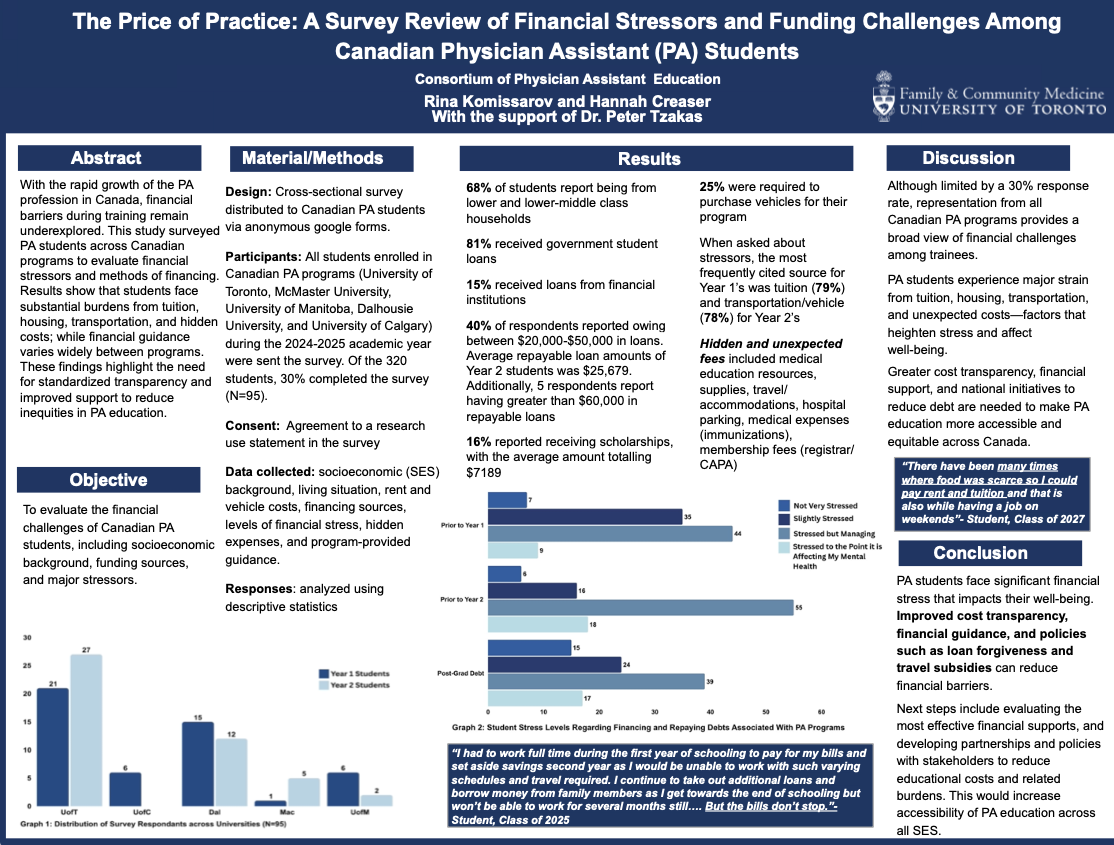
The Price of Practice: Financial Stressors and Funding Challenges Among Canadian PA Students // Komissarov, R., & Creaser, H. (2025). Consortium of PA Education. // A national survey highlighting the financial barriers PA students face, emphasizing the need for consistent funding and accessible financial support systems.

Safety and Healing of Arthroscopic Anatomic Glenoid Reconstruction vs. Bankart Repair for Subcritical Bone Loss: A Randomized Controlled Trial // Sonke, C., Licht, F., & Wong, I. (2025). Dalhousie University, Faculty of Medicine. // This randomized trial found that arthroscopic anatomic glenoid reconstruction offers comparable safety with fewer recurrences than Bankart repair in anterior shoulder instability.

Orthopedic Surgeons’ Satisfaction with Physician Assistants in Patient Care // Keshen, E., Press, J., Avery, J., Fashir, S., & Sephton, E. (2025). Dalhousie University, Faculty of Medicine. // Nova Scotia orthopedic surgeons report sustained satisfaction with PAs, noting improved clinical efficiency, collaboration, and patient outcomes since program implementation.

Exploring the Role and Potential of a Primary Care Physician Assistant Focusing on Women’s Health: A Canadian-Based Practice Reflection // Boychuk, G., & Derraugh, G. (2025). University of Manitoba, Max Rady College of Medicine. // A reflective case study demonstrating how PAs specializing in women’s health enhance access, continuity, and quality of primary care services in Canada.

Is 24 Hours Enough? A Retrospective Review of Antibiotic Duration After Closure in Gastroschisis. Zrinyi, A., Keijzer, R., & Lum Min, S. (2025). University of Manitoba, Rady Faculty of Health Sciences. This retrospective review supports limiting postoperative antibiotics for gastroschisis closure to 24 hours, aligning with APSA guidelines and promoting antimicrobial stewardship.




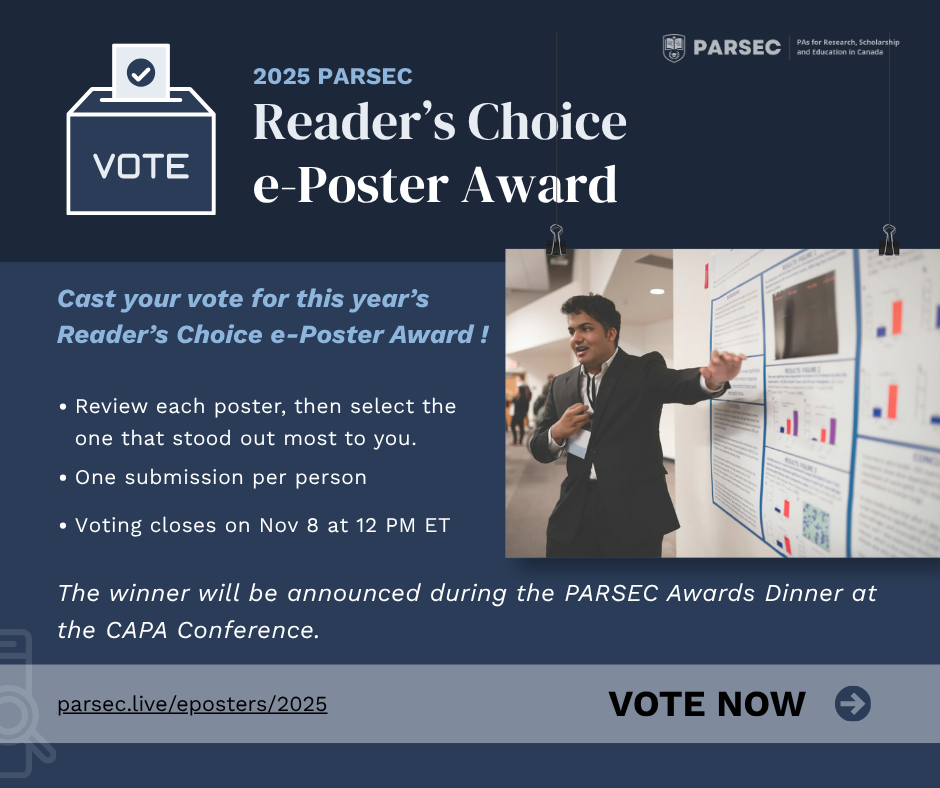
2025 PARSEC Reader’s Choice e-Posters Award
The Readers’ Choice E-Poster Awards highlight the creativity, scholarship, and innovation of Physician Assistants and PA students across Canada. Each year, members are invited to explore the submitted research posters and cast their vote for the project that inspires them most.
Voting is closed.
When reviewing this year’s e-Posters, please consider how effectively each one communicates its purpose, methods, and impact on the Physician Assistant profession.
Your vote helps recognize excellence in scholarship, clarity, and relevance to PA education and practice.
Each poster falls into one of three categories:
Clinical Research
Educational Research
Case Report.
You don’t need to assign categories yourself, click here to view a Poster Evaluation PDF of judging principles to help guide your vote.